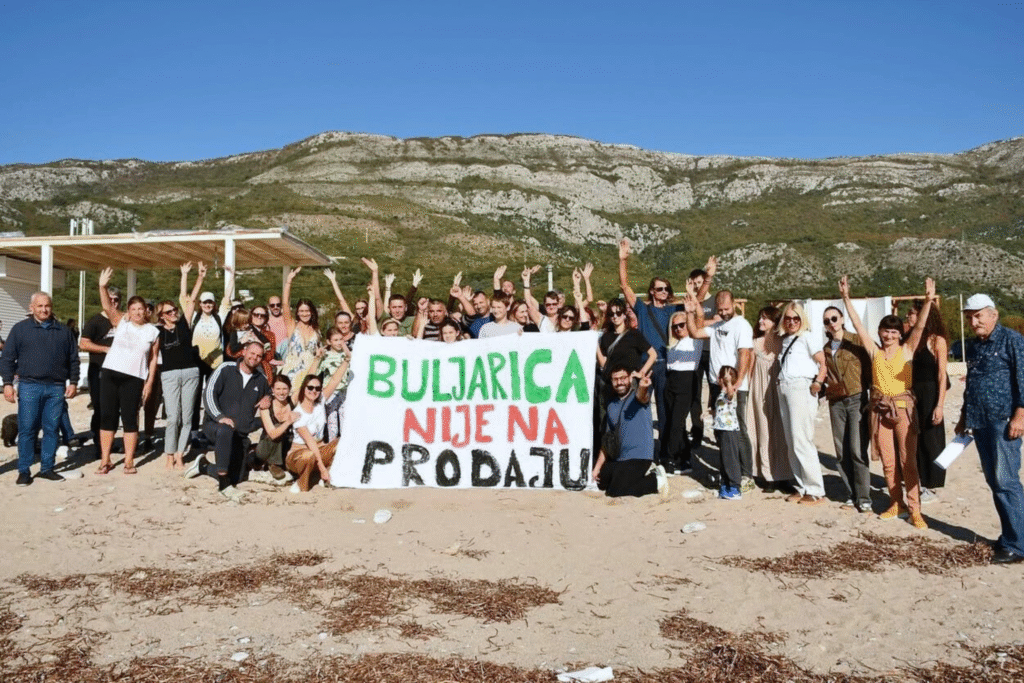
in the Shadow of Real Estate Speculation
While residents have been left without adequate infrastructure to this day, the land has been offered to foreign investors for decades. The fact that there is not even a functioning sewage system or a binding spatial plan is deliberate. It keeps the door open to create facts on the ground without the population. Without a spatial plan, large parts of Buljarica remain in a state of legal limbo to this day. It is precisely this missing plan that allows every new government — regardless of party or era — to renegotiate the land at its own discretion, without the population having a say beforehand.
This timeline shows how pressure from above has grown over the years and why we are now facing the most immediate threat in Buljarica’s history.
2000s
Real Estate Boom
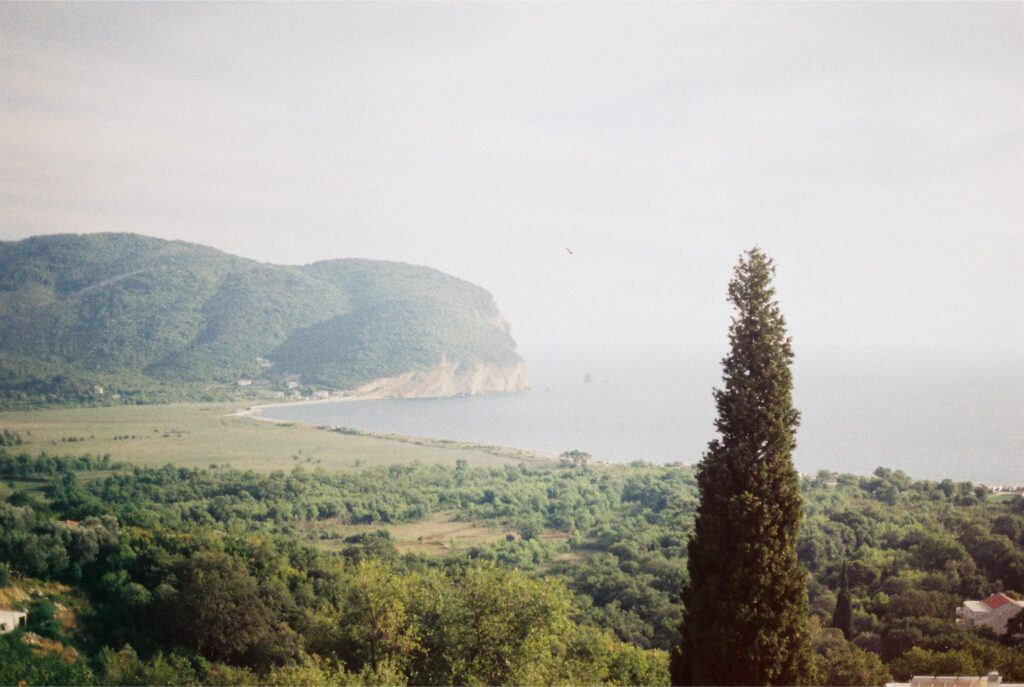
The Bay in the Sights of Investors
After 2000 and Montenegro’s independence in 2006, the coast became an object of speculation. The government at the time sold state land – often non-transparently and against the will of the population. Buljarica, too, was to be built over, but complex land ownership and a lack of infrastructure ultimately prevented the first large-scale projects.
More on this phase
Under the long-standing dominance of the DPS government, Montenegro’s coast became a magnet for international capital. State-owned companies and valuable coastal land were deliberately released for sale. Aided by opaque procedures and corrupt practices, the Bay of Buljarica quickly attracted the attention of major players – including British investment funds such as Metropolitan as well as renowned names such as the Marriott Group, the Al Fahim Group and Shangri-La Hotels & Resorts.
That no large-scale project could ultimately be realised despite this enormous interest was due to the difficult conditions on the ground: the immense cost of draining the regularly flooded land, the complete absence of basic infrastructure, and the severe fragmentation of private land ownership made a quick sell-off impossible at the time.
Sources:
Claudia Laštro / Florian Bieber / Jovana Marović: “Mechanisms of Dominance: Understanding 30 Years in Power of Montenegro’s Democratic Party of Socialists”. In: Comparative Southeast European Studies 71,2 (2023), pp. 210–236.
Inicijativni odbor za obnovu opštine Petrovac (ed.): Studija o opravdanosti osnivanja opštine Petrovac. Petrovac 2017.
2016
Legal Amendment & Tender
A Lex Specialis for Expropriation
Under the DPS government of Milo Đukanović, a dedicated legal amendment (a so-called lex specialis) is prepared to clear land for a Qatari-backed investor. The deal collapses because the civil society organisation MANS uncovers that the tender illegally included private property as well – among it land belonging to the Church, the largest private landowner in Buljarica.
More on this phase
On 12 May 2016, the Privatisation Council put the bay out to international tender. Officially it concerned 4.9 million square metres of state land, but research by the organisation MANS revealed the true extent: the tender in fact covered around 18 million square metres – including huge private plots that were to be sold off dirt cheap.
The tender was tailor-made for the Qatari consortium CDC International Corporation (CDCIC). The entanglements of the ruling elites also came into plain view: Ana Kolarević, sister of then Prime Minister Milo Đukanović, reportedly represented the Qatari investors, while the company of his brother Aco Đukanović was responsible for the project plans.
To push the sale through, Đukanović prepared an amendment to the expropriation law. This, however, triggered massive resistance: citizens’ initiatives such as Naše Ognjište and MANS took legal action against the land grab. The decisive blow finally came from the Orthodox Church as the largest landowner: after it refused to sell its church land, the billion-euro deal lost its foundation.
The case shows how much of a decisive difference independent research and civil society oversight already made back then.
Sources:
Dejan Milovac / Siniša Luković: “Kako je pripremana betonizacija Buljarice: Đukanovićevi partneri gradiće preko 40.000 stanova”. In: Mreža za afirmaciju nevladinog sektora (MANS), 22.10.2016.
Milorad Vujović, : “Pravni aspekt dešavanja u vezi sa Buljaricom”. In: Buljarica. Blago Paštrovića na tajkunskoj trpezi, Podgorica 2020, pp. 6-17.
Milorad Milošević / Marija Mirjačić: “Buljarica, dvije milijarde i familija: Đukanovići mogu da zarade milione”. In: Vijesti, 08.05.2015.
Goran Danilović: “Buljarica sa dva lica”. In: Vijesti, 03.05.2015.

2025
Bilateral Agreement with the UAE
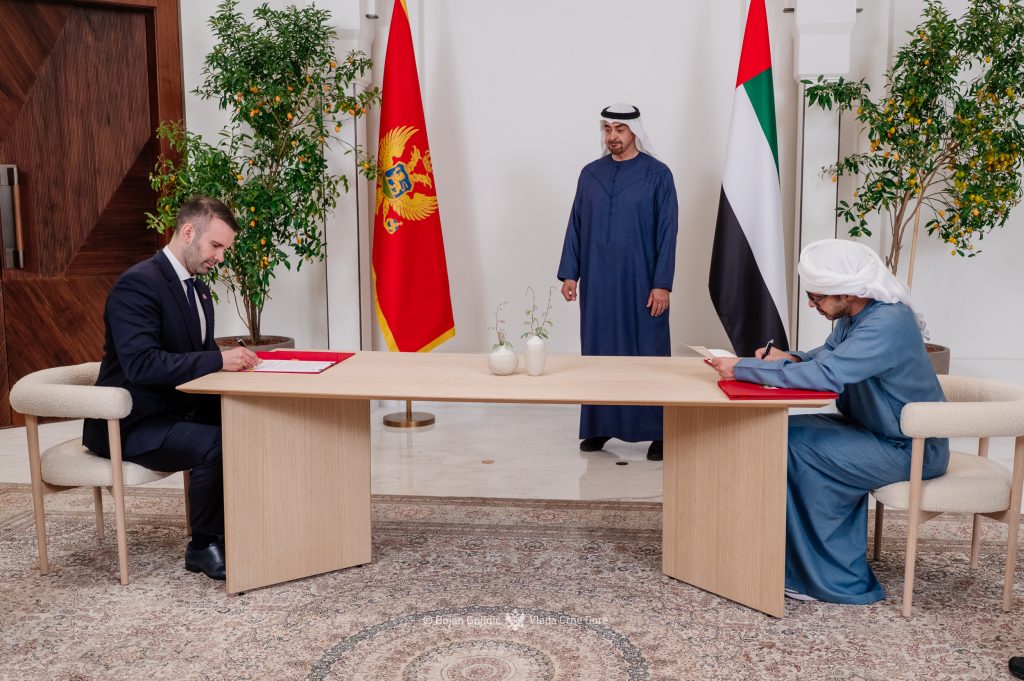
No Law Needed Anymore
In 2025, Prime Minister Milojko Spajić signed a bilateral agreement with the UAE that bypasses public tenders and suspends procurement and concession laws. The controversial major investor Mohamed Alabbar is to take over the bay, while politicians and local elites present the sell-off as having no alternative.
More on this phase
In 2025, Prime Minister Milojko Spajić (Evropa sad!) signed a bilateral agreement with the United Arab Emirates. The agreement bears the official name “Sporazum o saradnji u oblasti turizma i razvoja nekretnina” (Agreement on Cooperation in the Field of Tourism and Real Estate Development). Its real significance lies not in its tourism content but in its legal mechanism: it rules out public tenders and suspends the procurement and concession laws that would otherwise apply. This creates a new, more direct form of top-down planning – a state-to-state deal instead of a national law, which makes it even harder to scrutinise from outside.
The anti-corruption organisation MANS warned emphatically that dispensing with public tenders sets unconstitutional precedents and deliberately undermines domestic law and EU standards – of all times, during the decisive accession talks with the European Union.
The project becomes particularly explosive through the involvement of the Emirati investor Mohamed Alabbar (Emaar Properties, Eagle Hills). Alabbar is known for the megaproject Beograd na vodi (Belgrade Waterfront), which was pushed through in 2016 by violent, illegal demolitions in Belgrade’s historic Savamala district and today serves mainly as a speculative investment vehicle.
While the residents of Buljarica have been denied basic public services such as a sewage system or a binding spatial plan for decades, an alliance of politicians and local elites is exploiting this infrastructure deficit to portray the sell-off in the media as having no alternative. Local actors have even staged Alabbar in TV appearances as a benefactor to whom land should be “gifted”.
For the investors, time is running out: with Montenegro’s EU accession targeted for 2028, binding environmental and transparency standards would take effect – in particular the Natura 2000 network of protected areas, obligations to carry out environmental impact assessments, and European procurement law.
Sources:
“MANS: Spajić da kaže ko su drugi investitori, pored Alabara, sa kojima je pregovarao”. In: Vijesti, 18.05.2025.
Nebojša Čamprag, “Megaprojekt ‘Belgrade Waterfront’: Neugestaltung der Stadt durch autoritäre Stadtentwicklung” [Megaproject ‘Belgrade Waterfront’: Reshaping the City through Authoritarian Urban Development], sub\urban. zeitschrift für kritische stadtforschung 11, no. 3/4 (2023): 43–64.
Kakva je budućnost Buljarice? – OKVIR, broadcast by RTCG 12.12.2025.
Đurđa Radulović/Milka Tadić Mijović: “Kako po svijetu posluje investitor koji bi da gradi na velikoj plaži: Magla u Aziji, magla i oko nas”. In: Centar za istraživačko novinarstvo Crne Gore (CIN), 16.04.2025.
2025 – today
Counter-Movement
Naša Buljarica Is Born
In response to the investment campaign surrounding Mohamed Alabbar, the citizens’ initiative Naša Buljarica (“Our Buljarica”) was founded in 2025. It brings together scientists, activists and locals. Together with Montenegrin environmental organisations and international experts, the initiative counters the image of Buljarica as “unused wasteland”: the future of the bay lies not in mass tourism but in sustainable eco-villages.
More on this phase
Through the newly created Buljarica Advisory Board, locals are given targeted support in building their own sustainable small businesses, so that long-term value creation stays directly with the people on the ground instead of with a single investor. This is based on field data systematically collected by MES and CZIP on the bay’s intact ecosystem: it shows that, in the long run, sustainable eco-tourism and regional value creation clearly exceed the one-off, short-term speculative return of a luxury complex.
Sources:
Ratković, Rade: Koncept razvoja održivog turizma mjesta Buljarica. In: Mreža za afirmaciju nevladinog sektora (MANS) / Crnogorsko društvo ekologa (CDE) (eds.): Buljarica: Blago Paštrovića na tajkunskoj trpezi. Podgorica 2020, pp. 46–68.
“First meeting of the Buljarica Advisory Board held: A shared vision of development based on nature conservation is needed”. In: Vijesti, 13.06.2026.
Montenegrin Ecologists Society, “Together for Buljarica Wetland through Science and Community Engagement”.