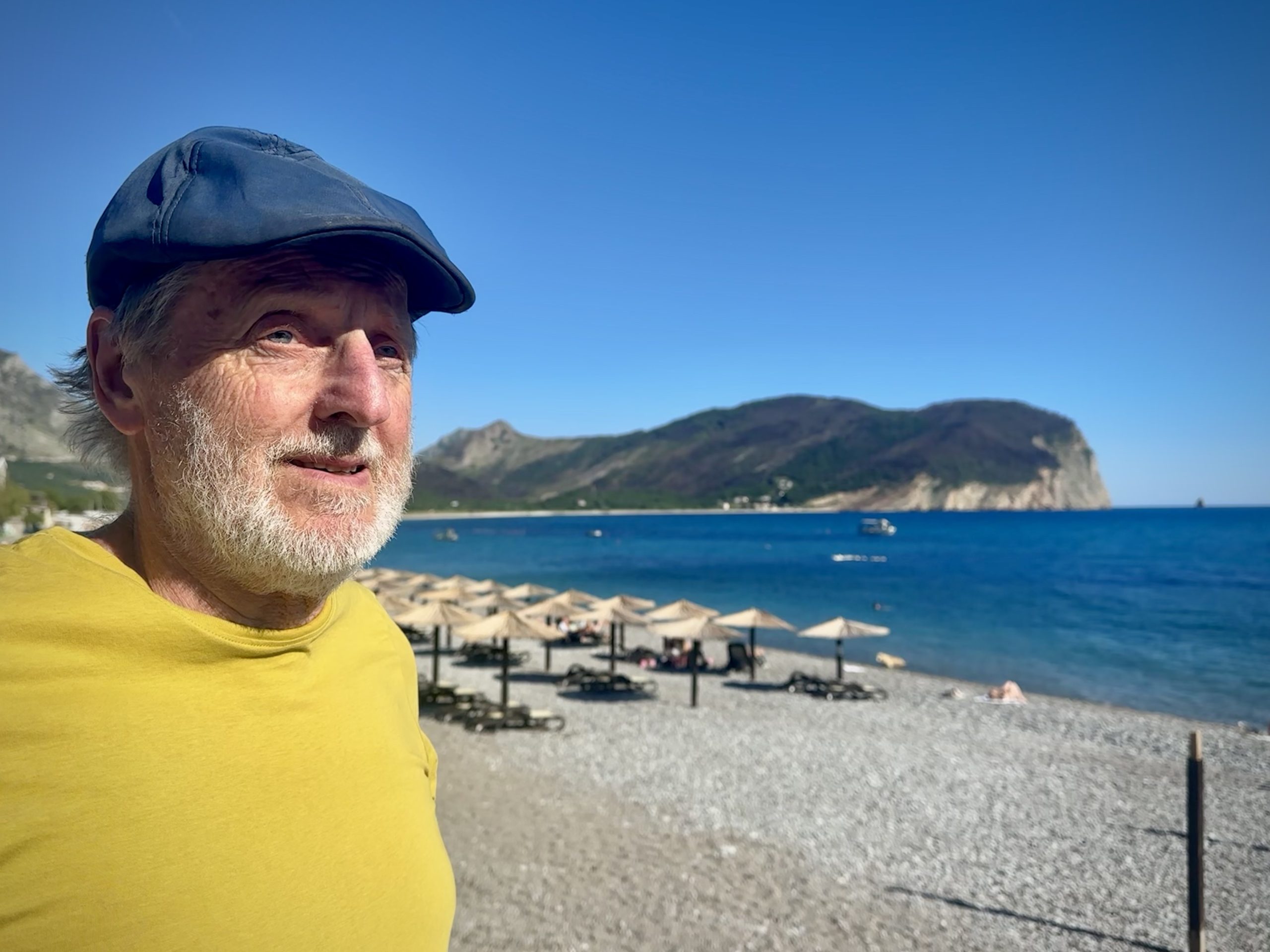
The warning signals from Durrës, Albania, are more than clear—and yet, investors continue to persist with their rhetoric about the “untapped potential” of Buljarica. What would you say to an investor who claims that there is only uncultivated land here waiting to finally be “utilized”?
I see everything except emptiness. I see one of the most complex ecosystems in the entire Adriatic. Here, we are talking about the largest bay in Montenegro, with a brackish water wetland covering an area of 58 hectares. It is a biological “engine room.” In our data, we have recorded 178 bird species, 93 of which nest here. Among them are magnificent species like the Egyptian vulture and the golden eagle. But this is not exclusively about the ecosystem. Buljarica is an ancient cultural space with traces of settlement dating back to prehistory, a Roman Villa Rustica, and the Gradište Monastery. When an investor plans a golf course there, they only see prices per square meter. I see a network of 36 habitat types and a population of 200 people whose economic security is directly tied to these resources.
Despite this, there is an official “Special Purpose Spatial Plan” that defines Buljarica as a zone for exclusive tourism. Why is this plan dangerous from a sociological perspective?
Because it creates a massive conflict between national strategies and the reality on the ground. On one hand, Buljarica is listed as a monument of nature and a potential “Natura 2000” area, while on the other hand, it is slated to be sacrificed as a construction zone for villa complexes and yacht marinas. Sociologically speaking, this means the local community loses control. A luxury complex of this scale would marginalize the residents. They would no longer be the creators of their homeland, but at best, auxiliary labor in an enclave. We call this “development through displacement.”
The media often promotes the narrative that large luxury hotels bring jobs and prosperity. Why do you believe this model makes no economic sense for the people of Buljarica?
That promise of prosperity through mega-projects is a classic delusion that we have been able to observe for decades on various coasts around the world. The profits from such resorts are not reinvested in the region; instead, they flow directly into the accounts of international investors. For the locals, often only the proverbial crumbs from the table remain. The promised jobs ultimately only arise in the precarious, low-wage sector as seasonal auxiliary labor, while managerial positions are filled by outsiders.
Added to this is a massive “leakage effect”—meaning that such a hotel procures all its goods, from wine, meat, and fish to vegetables, through global wholesale logistics chains instead of involving local agriculture or craftsmanship on the ground. The paradox is that while profits are privatized and taken out of the country in this manner, the municipality often has to bear enormous costs for infrastructure, such as water supply, the electrical grid, and waste disposal, funded by taxpayer money. In the end, the local population actually pays extra, while their centuries-old living space is sacrificed for a project that exists entirely apart from them economically.
What model do you think would be the alternative?
Today, the majority of households in Buljarica engage in subsistence farming, which is why a model of sustainable use would make particular sense here. If Buljarica is developed as an eco-village, the value-added chain remains local. Guests would stay in family guesthouses or small boutique hotels, and buy products from local beekeeping, fishing, and organic farming. Furthermore, local nature guides could be trained for hiking tours across Paštrovska Gora. With such a model, every euro stays in the municipality. That is economic resilience. A luxury resort is empty at the very next global crisis, whereas a diversified ecosystem made up of agriculture and quality tourism sustains itself into the future.
However, there are also voices on the ground who view the wetland primarily as a burden and who are bothered by the croaking of frogs and mosquitoes. In particular, mentioning the “triton” (newt), a protected aquatic creature, is often met with ridicule rather than enthusiasm. For many, the word “swamp” simply sounds like a source of problems. Why do you call what others laugh at an economic advantage?
You know, it’s almost ironic (laughs). While in some places people laugh at the croaking of frogs or the “triton,” ecological tourists in other parts of Europe pay hundreds of euros a day to experience precisely such untouched ecosystems. Anyone who sees only mosquitoes in a swamp has not understood modern tourism economics. A functional wetland is not a source of mosquitoes, but a regulated system. If we have dragonfly habitats there—and Buljarica is home to 41 species—then we have the best natural mosquito hunters in the world right outside the front door. Nature solves the problem on its own if we don’t throw it out of balance with half-baked embankments and stagnant brackish water.
What some perceive as noise pollution from frogs is, in reality, an acoustic stamp of quality for a healthy environment.We must move away from the idea that “exclusivity” consists only of marble floors and air-conditioned lobbies. The true luxury of the 21st century is the silence of civilization, accompanied by the music of nature. Ridiculing the triton is an economic own goal. In international marketing, the conservation status of these species is worth gold. It is a unique selling point compared to the interchangeable concrete deserts in Budva or Bečići.
So, if we drain the swamp to silence the frogs, are we simultaneously shutting down the bay’s biggest free attraction?
Exactly. In a world where such habitats are rapidly disappearing, Buljarica becomes an exclusive destination for nature observers. Did you know that birdwatching tourism is one of the fastest-growing niches globally? These tourists are educated, affluent, and—crucially—they don’t just come during the hot month of August. They come in spring and autumn, during bird migration. This solves the biggest problem of the Montenegrin coast: extreme seasonality.
Many people in the region do feel that the concrete plans of investors are the wrong path. However, locals often still lack a concrete vision of how Buljarica can be sustainably valorized instead. What does your concrete counter-proposal look like, and how do we make nature financially profitable for local citizens instead of foreign investors?
Our plan is based on three pillars that directly channel more money into household budgets. First, we turn protection into our own exclusive brand. By officially declaring the bay and Katič Island a Marine Protected Area, we position Buljarica on the international map of premium tourism destinations. This attracts precisely the tourists everyone is looking for: high-spending guests who are willing to pay good money for untouched nature, true peace, and authentic products.
To ensure these guests leave their money right here, we build low-impact, smart infrastructure. Instead of sinking millions into concrete embankments or marinas that destroy the ecosystem and bring nothing to the locals, we invest in a first-class network of cycling and hiking trails. We help citizens equip their private homes with solar energy to drastically reduce their own fixed costs, and we solve the painful wastewater problem through modern, ecological purification systems instead of simply discharging filth into the sea. A clean bay is, after all, the best selling point for any accommodation provider.
The absolute core and most important point for the community is a local fund. We propose an ecological tax of just 50 cents per guest per day. This won’t hurt any tourist. But with the thousands of visitors Buljarica hosts throughout the year, a huge sum accumulates. And the best part of all is that this money does not go to Podgorica, to some anonymous ministry, but into a foundation managed by the citizens of Buljarica themselves.
What could such a foundation do with that money?
With that money, for example, local nature guides could be trained, infrastructure could be maintained, and the village could be beautified step by step. Every tourist who spends the night here pays directly into the citizens’ collective treasury.This keeps the money in the community, ensures family independence, and allows prosperity to grow from the bottom up.Furthermore, the foundation could, for instance, buy or lease state land to prevent it from falling into the hands of investors who want to drain it. It would fund the restoration of archaeological sites. We are talking about a benefit-sharing model here. When nature thrives, the citizens’ collective treasury thrives too. This creates pride and identity.
Many landowners in the region, after years of economic stagnation, simply want to sell their property and close that chapter for themselves. The prospect of immediate multi-million deals with investors is tempting. How do you plan to overcome the skepticism of these people and demonstrate to them that your model is the financially smarter decision for them and their families in the long run?
Through education and figures. This is exactly what the revolutionary 2017 CDE study, “Ecosystem Assessment of Biodiversity Values and Threats in Buljarica,” provides. Selling land brings a one-time influx of money, but after that, you have lost your basis for livelihood. If you keep your land and use it for ecological agriculture or sustainable renting, you secure an income not just for yourself, but for future generations. We must show that Buljarica is the best-preserved habitat for the European pond turtle in the Eastern Mediterranean and a sanctuary for rare bat species. These are not “obstacles” to development; they are unique features that save Buljarica from the interchangeability we see in other concreted places. Such tourism strongholds around the world are already being dismantled and demolished to make room for a natural state once again.
What needs to happen on a political level for this bottom-up process to stand a chance?
An end to centralized decisions in distant ministries. The people who live close to the resources must set the agenda.Biomonitoring is needed so we can measure the impacts of actions, and we must halt contradictory construction plans.Buljarica has the potential to become the first village in Southeast Europe to prove that nature conservation is not a luxury one can only afford after becoming rich. Nature conservation is the way a region becomes sustainably wealthy. We offer a better alternative for the people, for the Adriatic, and for the future of Montenegro.
If this process were to start tomorrow, what would you propose to the locals first?
I would stop the planned auction of state land and instead invite the households of Buljarica and Petrovac to a major vision conference. We must show people that they are sitting on a gold mine, but one that you do not have to dig up—one that lies right on the surface, in the form of unique nature and culture.
© 2026 Naša Buljarica. All rights reserved. Text and photos are protected by copyright.